Water as Ingredient #1: What You're Actually Paying For
That £80 serum. That £150 moisturiser. The luxury cream in the beautiful jar. Turn it over, read the ingredients list, and there it is at the top: Aqua. Water.
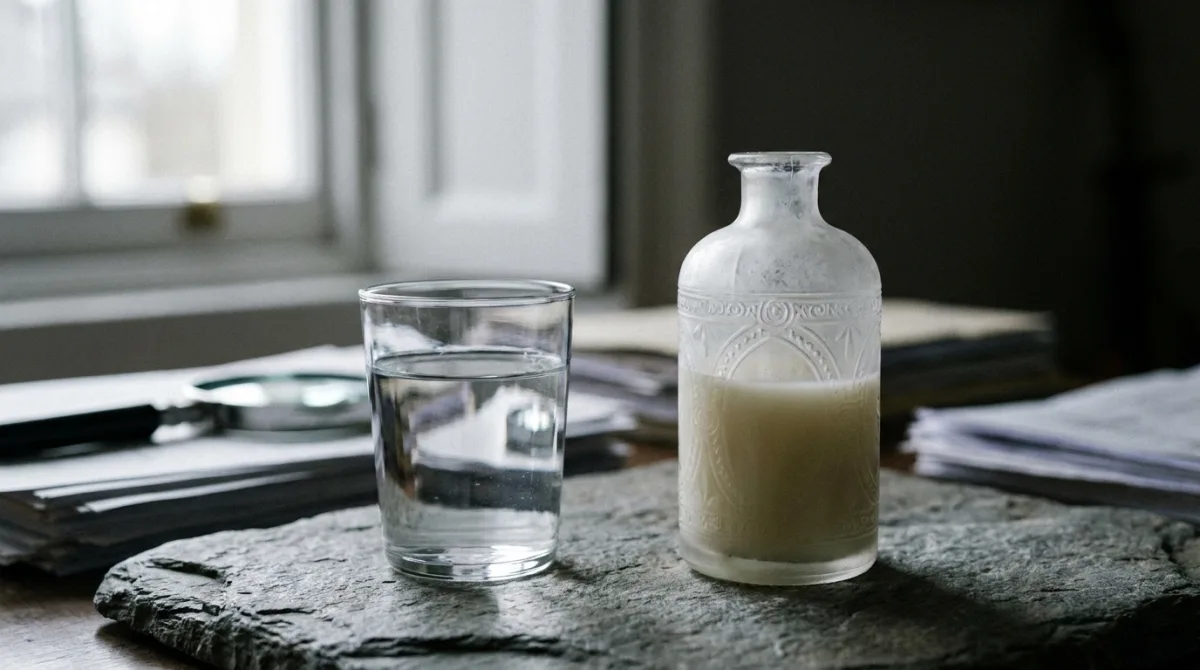
That £80 serum. That £150 moisturiser. The luxury cream in the beautiful jar. Turn it over, read the ingredients list, and there it is at the top: Aqua. Water. The most expensive water you’ll ever buy.
How Ingredient Lists Work
Cosmetics regulations require ingredients to be listed in descending order of concentration. Whatever’s first is present in the highest amount. Whatever’s last is present in the smallest amount. For ingredients under 1%, the order can vary, but the top of the list tells you what the product is mostly made of.
For the vast majority of skincare products — serums, moisturisers, toners, essences — water is the first ingredient. This isn’t a secret. It’s right there on the label. Most of what you’re buying is water.
The question isn’t whether this is true. The question is whether the price reflects it.
The Actual Composition
A typical water-based serum might be 70–80% water. A lightweight moisturiser might be 60–75% water. Even richer creams are often 50–60% water before you account for emulsifiers, thickeners, and preservatives.
The “active” ingredients — the vitamin C, retinol, peptides, or hyaluronic acid that the product is marketed on — usually constitute 1–15% of the formula. Often closer to 1–5%, which is where underdosed actives become the real story: the water isn’t the problem if what’s left after it is still too little to work.
This isn’t necessarily a problem. Water is a necessary vehicle for water-soluble ingredients. Many actives only work in aqueous environments. You can’t make a functional serum without a base to deliver the actives.
But it does raise questions about pricing. If your £80 serum is 75% water, and water costs essentially nothing, what are you paying for with the other £79.99?
Where The Cost Actually Is
Let’s break down what goes into a skincare product’s cost:
Raw ingredients: For most products, total ingredient cost is 10–30% of the manufacturing cost. The water is nearly free. The interesting question is what percentage of that 10–30% is the active ingredients versus fillers, emulsifiers, preservatives, and fragrance.
Packaging: Often costs as much as or more than the ingredients inside. That heavy glass jar, the magnetic closure, the outer box with embossing — these can represent 30–50% of production cost for luxury products. You’re literally paying for the jar.
Manufacturing: Mixing, emulsifying, filling, quality control. Scale matters here — large batches cost less per unit. Small-batch production costs more but may indicate fresher product.
Marketing: The celebrity endorsement. The magazine advertising. The influencer partnerships. The beautiful photography. For many brands, marketing spend exceeds ingredient spend by a factor of 5–10x.
Distribution: Retailers take 40–60% margins. Department stores take more. A product that costs £10 to make might wholesale for £30 and retail for £80. The majority of the price is distribution, not product.
Brand premium: The intangible value of the name. A handful of luxury houses can charge £200 for a moisturiser not because the ingredients cost £200 but because the brand commands that price. You’re paying for perception, positioning, prestige.
The £80 Serum vs The £20 Serum
Let’s compare two hypothetical vitamin C serums: one priced at £80, one at £20 — the same serum-cream price gap logic applies, just within one product category instead of across two.
Both contain 15% L-ascorbic acid — the concentration that actually works. Both have appropriate pH. Both use similar supporting ingredients: vitamin E, ferulic acid, water, stabilisers.
The £80 serum: Beautiful frosted glass bottle with dropper. Sold through department stores and clinics. Backed by advertising spend. Made by a heritage brand with prestige positioning.
The £20 serum: Simple plastic bottle with pump. Sold direct-to-consumer online. Minimal advertising. Made by a brand focused on value positioning.
The active ingredients in both products cost roughly the same — perhaps £2–3 worth of vitamin C, vitamin E, and ferulic acid per bottle. The difference in price is almost entirely packaging, marketing, distribution, and brand positioning.
This doesn’t mean the £80 serum is bad. It might have slightly better quality control, more elegant texture, a nicer user experience. But £60 better? That’s harder to justify on formulation alone.
When Premium Pricing Makes Sense
Sometimes higher prices do reflect better products:
Genuinely expensive actives. Some ingredients — certain peptides, specialised delivery systems, rare botanical extracts — cost significantly more than commodity alternatives. If a formula contains these at meaningful concentrations, higher prices can be justified.
Complex stabilisation. Keeping unstable actives like vitamin C or retinol effective requires formulation expertise and appropriate packaging. Airless pumps, nitrogen-flushing, and advanced stabilisation systems add cost.
Small-batch production. Brands making smaller quantities sacrifice economies of scale. If freshness and quality control matter, smaller batches may justify premium pricing.
Research investment. Brands that fund independent research, develop novel ingredients, or conduct proper clinical trials have costs that mass-market brands don’t. That R&D has to be paid for somehow.
The key is whether the premium reflects these factors or just brand positioning. The ingredient list and concentration disclosure tell you more than the price tag.
The Fancy Water Trick
Some brands try to make their water-first formulas sound more impressive:
“Thermal spring water” — still water, just from a specific source. The minerals in thermal water are present in trace amounts and unlikely to benefit skin more than regular purified water.
“Glacier water” — marketing poetry. Water is water. Where it froze doesn’t change its function as a cosmetic vehicle.
“Rose water” or “Aloe juice” as first ingredient — these can replace plain water and add some additional benefit, but they’re still mostly water. Listing “Rosa Damascena Flower Water” instead of “Aqua” makes the ingredient list sound more botanical without fundamentally changing what you’re getting.
“Ionised water” or “structured water” — pseudoscientific marketing. Water’s molecular structure isn’t retained when mixed with other ingredients. You’re paying for language, not chemistry.
What To Actually Look For
Knowing that most products are mostly water doesn’t mean you should avoid water-based products. It means you should evaluate what else is in there and whether the price reflects the actives.
Check active positions. Where are the ingredients you’re buying the product for? If vitamin C is listed after fragrance and preservatives, there’s not much in there. If it’s second or third, you’re getting a meaningful amount.
Look for concentration disclosure. Brands that tell you “15% vitamin C” or “2% hyaluronic acid” are giving you information. Brands that just list ingredients without percentages — often hiding behind proprietary blend names — are keeping you in the dark.
Consider the vehicle. Some products intentionally use less water: anhydrous (water-free) oils and balms, high-concentration serums, oil-based formulas. These can deliver actives differently and may offer better value per gram of active ingredient.
Ignore fancy water claims. Thermal, glacier, volcanic, ionised — none of these make the water work better as a cosmetic base. They make marketing copy work better at justifying prices.
The Bottom Line
Most skincare is mostly water. That’s fine — water is a necessary vehicle. But when you’re paying £80 for a 30ml serum, you should understand that perhaps £0.01 of that is the water that makes up 70% of the product.
What you’re paying for is: the active ingredients (often 10–20% of production cost), the packaging (often more than the contents), the brand (often the largest component of price), and the distribution (retailers take massive margins).
This doesn’t mean expensive skincare is always overpriced or cheap skincare is always better value. It means price alone tells you almost nothing about what’s actually in the bottle. Read the ingredients. Look at concentrations. Understand that luxury pricing rarely reflects proportionally better formulation — it reflects brand value, packaging costs, and distribution models.
The water in your £80 serum is the same as the water in your £20 serum. The question is whether everything else justifies the difference.