The Proprietary Blend Con: Trademarked Complexes at Homeopathic Doses
Every few months, a skincare brand launches something revolutionary. A proprietary complex with a trademarked name. Groundbreaking technology. Years of research.
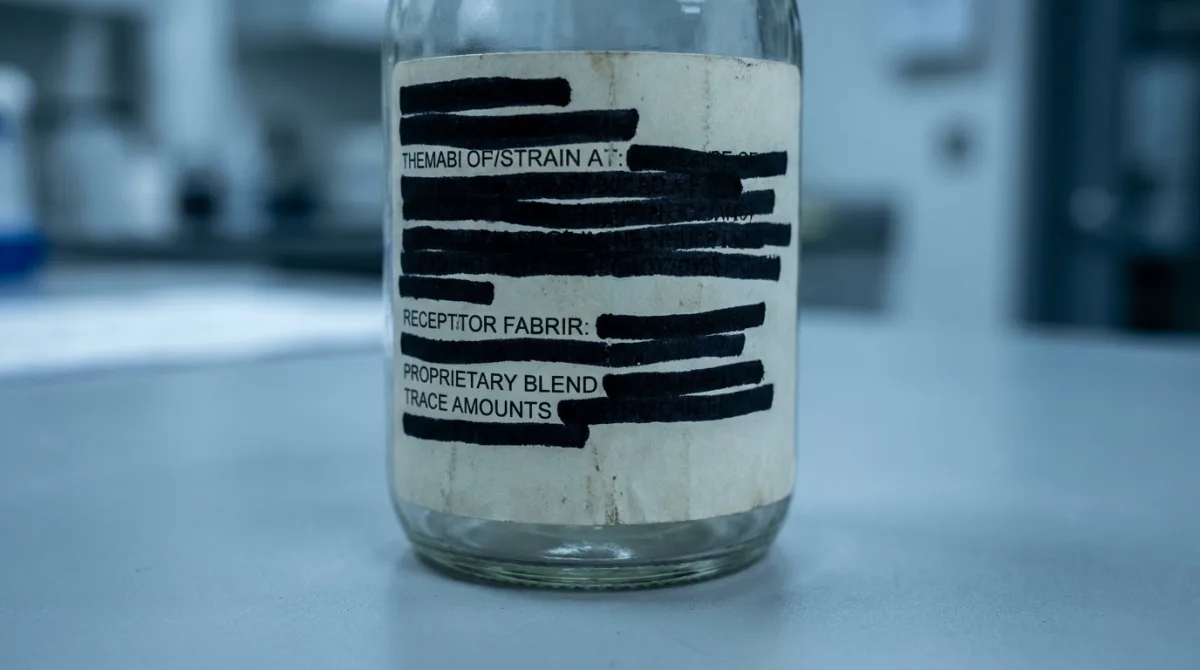
Every few months, a skincare brand launches something revolutionary. A proprietary complex with a trademarked name. Groundbreaking technology. Years of research. Patented formulation. The marketing is slick. The name sounds scientific. The price point reflects all that innovation. And often, when you look at the actual formula, the hero ingredient is present in amounts so small it might as well not be there at all.
The Maths Nobody Does
Ingredient lists are ordered by concentration. The first few ingredients make up the bulk of the formula — typically water, emollients, and structural components. As you move down the list, percentages drop.
When a proprietary complex appears in the middle or lower portion of an ingredient list, it might represent 0.5% of the total formula. Sometimes less.
Now consider that this complex contains multiple ingredients — let’s say four. That 0.5% is divided between them. You’re looking at roughly 0.125% of each ingredient, assuming equal distribution. Often the distribution isn’t equal, meaning some components are present at even lower levels.
At 0.1% or below, most skincare ingredients are sitting well under the therapeutic threshold where they’d do anything meaningful for your skin. They exist in the formula the same way a single grain of sugar exists in your tea after you’ve already stirred in four spoonfuls. Technically present. Practically irrelevant.
Why Brands Do This
The proprietary complex game serves marketing, not skin. It creates differentiation in a crowded market. Every brand needs something unique to talk about, something competitors can’t claim to have.
Trademarking a blend of ingredients — even at ineffective doses — creates that point of difference. The complex sounds exclusive. It can be promoted in advertising. It appears on packaging. It gives sales staff something to pitch.
It also obscures direct comparison. When brands use generic ingredient names, consumers can compare. ‘This product has 15% vitamin C, that one has 10%.’ Clear. Comparable. Potentially unflattering for the weaker formula.
But when one brand has ‘Vitamin C’ and another has ‘LuminoBoost Complex™’, comparison becomes impossible. The trademark creates a black box. The consumer has no way to evaluate whether they’re getting equivalent value or paying premium prices for marketing.
The Legal Framework
In the UK and EU, cosmetic regulations require full ingredient disclosure by INCI name, in descending order of concentration — that part isn’t optional, and it’s stricter than the ‘proprietary blend’ loophole American supplement labels sometimes hide behind, where an entire blend can be declared as one line with no individual ingredients broken out at all. What UK and EU rules don’t require is percentage disclosure (with a few exceptions, like allergens flagged above a set threshold). Brands must list what’s in the product, not how much of it.
This creates a loophole large enough to drive a marketing department through. A product can legitimately claim to contain a beneficial ingredient while including it at levels far below any therapeutic threshold.
The ingredient is ‘in there’. The claim isn’t false. It’s just meaningless — the same transparency hypocrisy that lets brands hide behind proprietary blends while demanding openness from everyone else.
How To Spot It
Position in the ingredient list matters, but it’s not the whole story. Some highly effective ingredients work at low percentages — certain peptides, for instance, are active at fractions of a percent. Context matters.
The red flags are proprietary complexes containing multiple ingredients, positioned well below the top of the formula. If a branded blend contains four components and appears in the bottom third of the ingredient list, basic maths tells you each component is present at trace levels.
Also watch for complexes that combine trendy ingredient categories — a ‘Botanical Antioxidant Complex™’ containing six different plant extracts, for instance. Spreading the percentage across six ingredients virtually guarantees none of them are present in meaningful amounts.
What Actually Works
Effective skincare isn’t complicated. It requires active ingredients at concentrations high enough to do something, in formulations stable enough to deliver them to your skin, at price points that reflect actual value rather than marketing spend.
The brands that take formulation seriously don’t need to hide behind trademarked complexes. They’ll tell you exactly what’s in the product and at what percentage. They’ll reference the research supporting those concentrations. They’ll let the formula speak for itself.
When a brand leads with a proprietary complex name rather than straightforward ingredient information, ask yourself why. Usually, the answer is that the straightforward information wouldn’t be impressive enough to justify the price.
The best products don’t need smoke and mirrors. They just need to work.