Stem Cell Skincare: The Science That Isn't
Stem cells represent one of medicine's most promising frontiers — regenerating tissue, treating disease, potentially reversing aging.
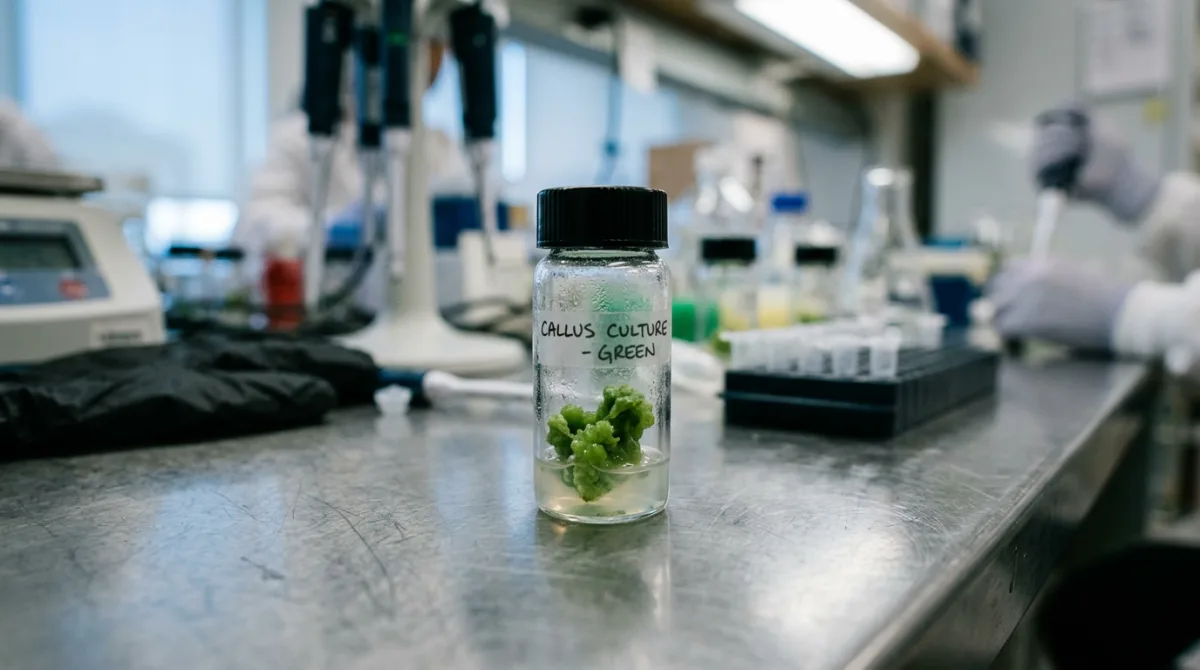
Stem cells represent one of medicine’s most promising frontiers — regenerating tissue, treating disease, potentially reversing aging. So naturally, the skincare industry slapped the term on products and charged a premium. There’s just one problem: plant stem cells can’t do anything for human skin.
What Stem Cells Actually Are
Stem cells are undifferentiated cells capable of developing into specialised cell types. In humans, they serve as a repair system — dividing to replenish other cells, maintaining and regenerating tissues throughout life.
Human stem cells communicate with other human cells through specific signalling pathways. They respond to the human cellular environment. They produce factors that human cells recognise and react to. This species-specific communication is fundamental to how stem cells function.
Medical stem cell research explores using human stem cells — or reprogrammed cells — to regenerate human tissue. It’s complex, heavily regulated, and still largely experimental. The potential is genuine. The application is years or decades away for most conditions.
What Plant Stem Cells Are
Plants have stem cells too. Located in meristems — growth regions at root tips and shoot tips — plant stem cells enable plants to grow continuously throughout their lives, regenerate damaged tissue, and adapt to environmental conditions.
Plant stem cells communicate with other plant cells. They respond to plant signalling molecules. They produce factors that regulate plant growth and development. None of this has any relevance to human cellular biology.
A plant stem cell cannot communicate with a human cell any more than a plant could read a book. The signalling systems are completely different. The cellular machinery is incompatible. There is no mechanism by which a plant stem cell could instruct a human skin cell to do anything.
The Logical Problem
Think about this for a moment. If plant stem cells could regenerate human tissue, we wouldn’t need complex medical research. We’d just apply apple extract to wounds and watch them heal. Burn victims would recover with grape seed serum. The entire field of regenerative medicine would be solved by the cosmetics industry.
Obviously, this isn’t reality. Plant stem cells have been around forever. If they could regenerate human skin, we’d have noticed by now. The discovery wouldn’t be in a face cream — it would be in every hospital in the world.
The claims aren’t modest either. “Activates skin’s stem cells.” “Stimulates cellular renewal.” “Regenerates at the deepest level.” These are medical claims being made about plant extracts that have no biological pathway to deliver them — the same trick as multi-weight hyaluronic acid, where a scientific-sounding hierarchy substitutes for actual evidence.
What’s Actually In The Products
Most “stem cell” skincare doesn’t contain living stem cells at all. What they contain is one of several things:
Plant stem cell extracts. Dead plant material that was once derived from stem cell cultures. The cells are lysed (broken open), and the resulting extract is added to products. You’re not getting stem cells — you’re getting plant juice from cells that used to be stem cells before they were killed and processed.
Plant stem cell “technology”. Some brands culture plant stem cells, harvest compounds produced during growth, and incorporate those compounds into products. This is marginally more sophisticated but equally irrelevant to human skin regeneration. You’re getting plant metabolites, not stem cell function.
Antioxidant-rich plant extracts. Many plants marketed as stem cell sources — apples, grapes, edelweiss — are simply rich in antioxidants. The stem cell positioning is marketing; the actual benefit, if any, comes from the antioxidant content. You could get similar antioxidants from non-stem-cell sources at lower prices.
The Swiss Apple Story
The stem cell skincare trend largely traces back to a Swiss apple variety called Uttwiler Spätlauber. This apple stays fresh longer than other varieties — it resists wrinkling and browning.
A Swiss company developed a way to culture stem cells from this apple and extract compounds from the culture. They marketed it as having anti-aging properties based on the apple’s longevity and some in-vitro studies showing effects on human cell cultures in petri dishes.
The leap from “this apple stays fresh” to “this apple extract will keep your skin young” is not science — it’s storytelling. Apples stay fresh because of their cellular structure and enzyme systems. Human skin ages through completely different mechanisms. The connection is narrative, not biological.
In-vitro studies — where you put something on cells in a dish — don’t predict real-world skin effects. You can kill cancer cells with a handgun in a petri dish too; that doesn’t make guns a cancer treatment. Getting an extract to affect cells in a lab is not the same as getting it through the skin barrier to affect living tissue in meaningful ways.
What The Research Actually Shows
Peer-reviewed clinical research on plant stem cell skincare is thin. Most studies are small, short-term, and manufacturer-funded — the usual pattern behind most skincare science claims. Many show improvements in “skin appearance” or “perceived smoothness” — subjective outcomes easily influenced by the moisturising base the stem cell extract is delivered in.
There’s no compelling evidence that plant stem cell extracts outperform other antioxidant-rich plant extracts, and no published research establishing what therapeutic threshold — if any — would make them work. There’s no evidence they stimulate human stem cells or enhance cellular regeneration in any measurable way. There’s no mechanism by which they could.
What there is: marketing budgets, premium pricing, and the borrowed credibility of legitimate stem cell research applied to products that have nothing to do with it.
Why This Matters
Stem cell skincare typically commands premium prices — £80, £150, £300 or more — based on the implied advanced science. You’re paying for something the product cannot deliver.
The products themselves might be fine. A well-formulated serum with antioxidants and good hydrators will benefit your skin regardless of whether it contains plant stem cell extract. But you could get similar benefits from products without the stem cell marketing — and without the stem cell price.
More broadly, the stem cell trend represents something concerning about skincare marketing: the willingness to borrow language from genuine science to sell products with no scientific basis for the implied claims — the same pattern that turned “clean” into a marketing category with no legal definition. It erodes trust and makes it harder for consumers to evaluate legitimate innovations.
What Actually Supports Skin Cell Function
If you want to support your skin’s actual stem cells — the human ones in your epidermis — the evidence points to:
Sun protection. UV radiation damages epidermal stem cells and accelerates their aging. Consistent SPF use protects the cells responsible for skin renewal.
Retinoids. Vitamin A derivatives have decades of research showing they support cellular turnover and can influence gene expression in skin cells. This is actual cellular-level effect, not marketing language.
Antioxidants. Protecting cells from oxidative damage supports their function. Vitamin C, vitamin E, niacinamide — these have evidence. They just don’t have the sexy stem cell story.
General skin health. Adequate hydration, barrier support, and avoiding irritation create an environment where your skin can function optimally — including its natural regeneration processes.
The Bottom Line
Plant stem cells have no biological pathway to communicate with, activate, or regenerate human cells. The term “stem cell” in skincare is borrowed prestige from legitimate medical research applied to products that don’t deserve it.
If you enjoy a product that happens to contain plant stem cell extracts, that’s fine. Enjoy it for what it actually does — provide antioxidants and hydration. But don’t pay premium prices for stem cell claims. You’re buying the story, not the science.
When skincare sounds too good to be true — when it promises regeneration from a plant extract, when it invokes medical technology for a face cream — it probably is. The real science of skin aging is complicated, slow, and rarely available in a jar. Anyone suggesting otherwise is selling something.