Skin Barrier Repair: The Problem You Probably Don't Have
Ceramides, barrier creams, 'repair' serums. The skincare industry has convinced millions their skin barrier is damaged. For most people, it isn't.
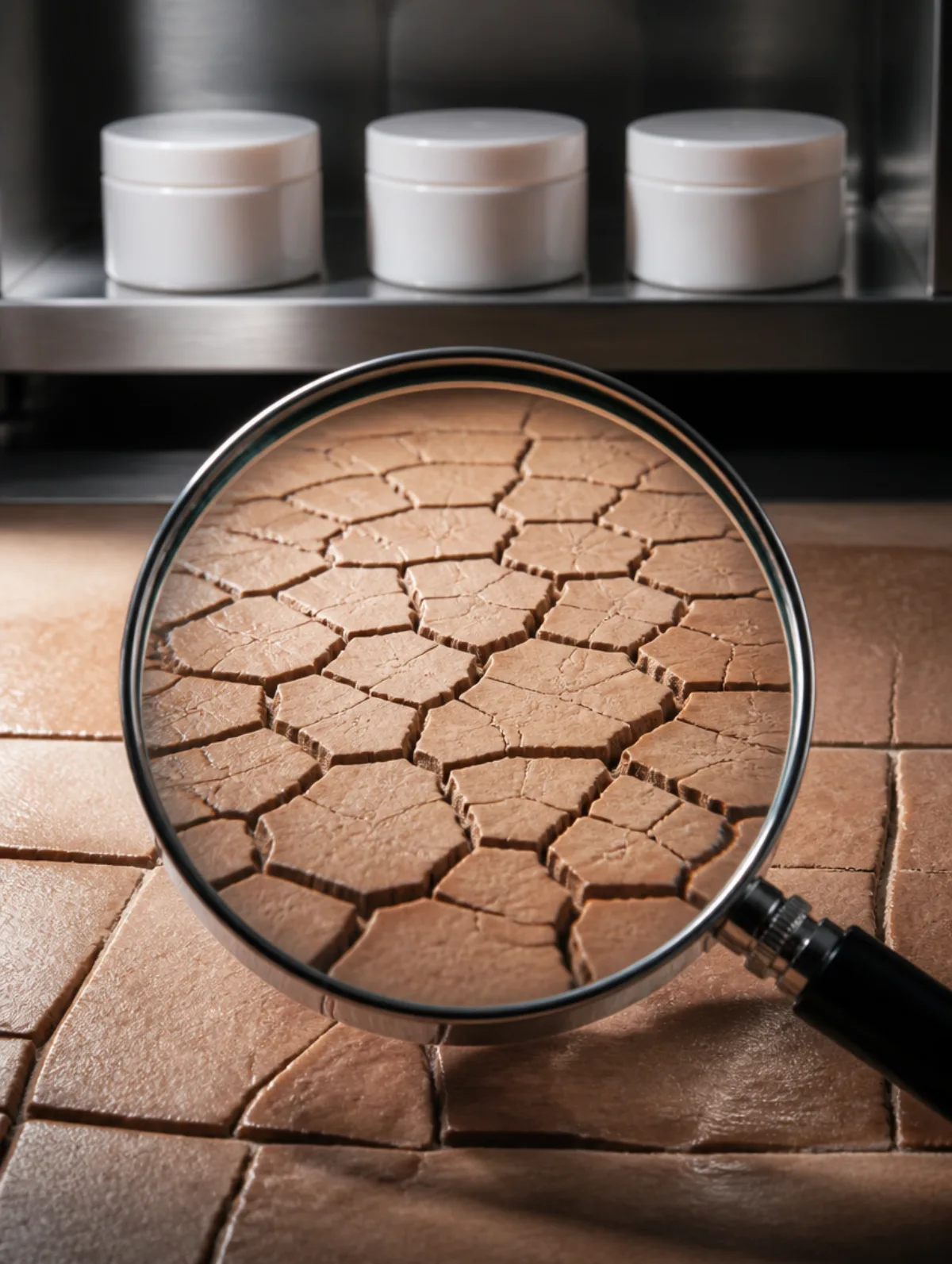
Somewhere around 2022, the skincare industry discovered the stratum corneum. Or rather, it discovered that renaming “dry skin” as “barrier damage” could sell a much more expensive solution.
Real Biology, Manufactured Anxiety
The skin barrier is genuine physiology. The stratum corneum — your outermost layer of dead skin cells held together by lipids — stops water leaving and irritants getting in. When it’s genuinely compromised, you know about it: eczema flares, contact dermatitis, raw skin after a chemical peel gone wrong. These are clinical presentations, not the vague “tightness” or “sensitivity” that barrier-repair marketing trades on.
What happened over the past few years is subtler. The industry took a real biological structure and built a fear campaign around it. Social media filled with infographics showing cracked, cartoon skin cells — bricks without mortar, walls with holes. The message was consistent: your barrier is probably damaged, and you need dedicated products to fix it.
The timing was not accidental. It arrived just as the over-layered routines of the late 2010s started causing real irritation in real people. Rather than admit that selling ten steps was the problem, the industry sold step eleven: barrier repair.
What Barrier Repair Products Actually Contain
Strip away the branding and most barrier repair products contain ceramides, fatty acids, cholesterol, glycerin, and niacinamide in various combinations. These are standard moisturising ingredients. Ceramides are lipids your skin already produces. Glycerin is a humectant that has been in skincare formulations for over a century. Niacinamide is vitamin B3.
None of this is new. What changed is the positioning. A moisturiser with ceramides and niacinamide costs eight pounds. Rebrand it as a “barrier repair treatment” and the price triples. The ingredients list stays the same — the narrative shifts.
There is a legitimate question about whether topically applied ceramides actually integrate into your stratum corneum or just sit on the surface acting as occlusives. The research is mixed. A 2023 systematic review in the Journal of the European Academy of Dermatology and Venereology found that ceramide-containing moisturisers improved symptoms in atopic dermatitis patients, but struggled to separate the ceramide effect from the general emollient effect. The moisturiser worked because it moisturised — not because it “repaired” anything structural.
The Self-Fulfilling Cycle
Here is where the barrier-repair trend turns genuinely cynical. The same brands selling barrier repair products also sell the aggressive actives most likely to cause irritation in the first place: high-concentration retinoids, daily AHA peels, potent vitamin C serums layered under chemical sunscreens.
The cycle runs like this: sell a consumer an aggressive routine that strips or irritates their skin. Wait for the inevitable dryness and redness. Diagnose it as “barrier damage.” Sell them a recovery product. Then, once the skin calms down, suggest reintroducing the actives — slowly, of course, with the barrier cream as a safety net. The industry creates the problem, then sells you the fix.
This mirrors the logic behind skincare detox mythology. Convince someone their skin has accumulated damage, then sell the antidote. The difference is that “barrier repair” sounds more scientific, which makes it harder to question.
When to Actually Worry
Genuine barrier compromise exists. Conditions like eczema, rosacea, and psoriasis involve real dysfunction in the skin’s lipid matrix. Certain medical treatments — isotretinoin, aggressive laser resurfacing, radiation therapy — can strip the barrier in ways that need targeted intervention. If a dermatologist has diagnosed a barrier-related condition, appropriate emollients and sometimes prescription treatments are warranted.
But the person scrolling social media who feels a bit tight after cleansing and reaches for a thirty-five-pound “barrier rescue” serum probably has a barrier that is working just fine. They likely need a gentler cleanser or a basic moisturiser — the kind that costs under a tenner and doesn’t come with an infographic about compromised bricks.
The skinimalism trend got one thing right: fewer products, less stripping, less irritation. Where it went wrong was becoming its own premium category rather than an honest admission that the industry had been overselling complexity for years.
The Uncomfortable Bit
Your skin barrier repairs itself. That is, quite literally, what it evolved to do. Healthy stratum corneum turns over roughly every two to four weeks. Unless you are actively disrupting that cycle with harsh products or have an underlying condition, the barrier does not need outside help — certainly not from a product positioned at three times the price of an equivalent moisturiser.
The barrier-repair trend is not about helping your skin. It is about repackaging basic hydration as advanced treatment, complete with pseudoscientific diagrams and the quiet suggestion that you’ve been damaging yourself all along. For most people, the best barrier repair strategy is to stop buying the products that compromise it in the first place — and to recognise a rebadged moisturiser when you see one.