pH Claims: When They Matter and When They Don't
pH-balanced. Matches your skin's natural pH. Optimised acidity. pH claims have become a marketing fixture, implying scientific precision and skin compatibility.
pH-balanced. Matches your skin’s natural pH. Optimised acidity. pH claims have become a marketing fixture, implying scientific precision and skin compatibility. For some products, pH genuinely matters. For most, it’s irrelevant noise.
What pH Actually Is
pH measures acidity or alkalinity on a scale of 0-14. Seven is neutral. Below 7 is acidic. Above 7 is alkaline (basic).
Healthy skin has an acid mantle — a thin film on the skin surface with a pH of approximately 4.5-5.5. This slightly acidic environment supports the skin microbiome, helps maintain barrier function, and protects against pathogens.
The concept is real. The question is whether the pH of individual skincare products meaningfully affects this acid mantle.
When pH Genuinely Matters
For specific product categories, pH is crucial:
AHA exfoliants. Alpha hydroxy acids (glycolic, lactic, mandelic) only exfoliate effectively at low pH — typically 3.0-4.0. At higher pH, they become moisturising but lose their exfoliating function. An AHA product with pH above 4.5 is barely working as an exfoliant.
L-ascorbic acid (vitamin C). Pure vitamin C requires low pH (below 3.5, ideally around 2.5-3.0) to remain stable and penetrate skin effectively. Higher pH means less penetration and faster degradation — get the pH wrong and you’ve made the same mistake as a vitamin C formulated below its therapeutic threshold: technically present, functionally useless. pH matters here.
BHA (salicylic acid). Works best at pH 3.0-4.0. Higher pH reduces effectiveness.
Enzyme exfoliants. Proteolytic enzymes have specific pH ranges where they’re active. Outside these ranges, they don’t work.
For these products, pH isn’t marketing — it’s fundamental to whether the product works at all.
When pH Barely Matters
For most skincare products, pH claims are largely irrelevant:
Moisturisers. Your skin buffers the pH of a thin layer of moisturiser within minutes. Whether the moisturiser is pH 5 or pH 7 matters little — it’s not sitting at that pH on your skin for long.
Serums without pH-dependent actives. A hyaluronic acid serum, a niacinamide serum, a peptide serum — these work across a wide pH range. Their efficacy doesn’t depend on precise acidity.
Sunscreens. UV filters work through their molecular structure, not their pH environment. Sunscreen pH isn’t relevant to protection.
Oils and balms. pH is a measure of hydrogen ion concentration in water. Anhydrous (water-free) products don’t really have a meaningful pH.
For these products, “pH-balanced” is marketing language borrowing scientific credibility without scientific necessity.
The Buffering Reality
Your skin is generally good at maintaining its own pH, though how well it does so varies from person to person:
When you apply a product with different pH, your skin’s acid mantle typically begins buffering it almost immediately. The sebum, sweat, and natural moisturising factors on your skin surface work to restore the normal pH environment.
Studies show that even after washing with alkaline soap (pH 9-10), skin pH returns to normal within 30-60 minutes for most people. The disruption is temporary.
This doesn’t mean pH never matters — repeated exposure to high-pH products (like very alkaline soaps used constantly) can stress the skin over time. But occasional use of products at non-ideal pH is typically buffered without lasting effect.
The Cleanser Question
Cleansers are where pH gets complicated:
Traditional soap is highly alkaline (pH 9-10). This can temporarily disrupt the acid mantle and, for some people, cause irritation or dryness with regular use.
Modern “pH-balanced” cleansers aim for pH 5-7 — closer to skin’s natural acidity. This causes less immediate disruption.
But here’s the nuance: whether a cleanser irritates depends on more than pH. Surfactant type, concentration, how long you leave it on, how thoroughly you rinse — all matter as much or more than the pH number.
A gentle surfactant at pH 7 may be less irritating than an aggressive surfactant at pH 5.5. The pH number alone doesn’t guarantee gentleness.
The Marketing Inflation
pH claims have expanded far beyond where they’re relevant:
“pH-balanced moisturiser” sounds scientific but means little. Most skin buffers any reasonable pH within minutes. The claim suggests careful formulation but doesn’t indicate superior efficacy.
“Matches your skin’s pH” is technically meaningless for products that don’t have pH-dependent actives. Whether a hyaluronic acid serum is pH 5 or pH 6 doesn’t affect how it hydrates — it’s the same molecular weight sleight of hand applied to acidity instead of Daltons.
“Optimal pH for skin health” is vague enough to mean anything. Every product could claim this because the range considered acceptable (roughly 4-7) covers most well-formulated products anyway.
The inflation of pH claims is classic skincare marketing: take something that matters in specific contexts, generalise it to all contexts, and charge a premium for the scientific-sounding claim. It sits alongside “clinically proven” and “dermatologically tested” in the same drawer of phrases that imply rigour without delivering any.
What To Actually Consider
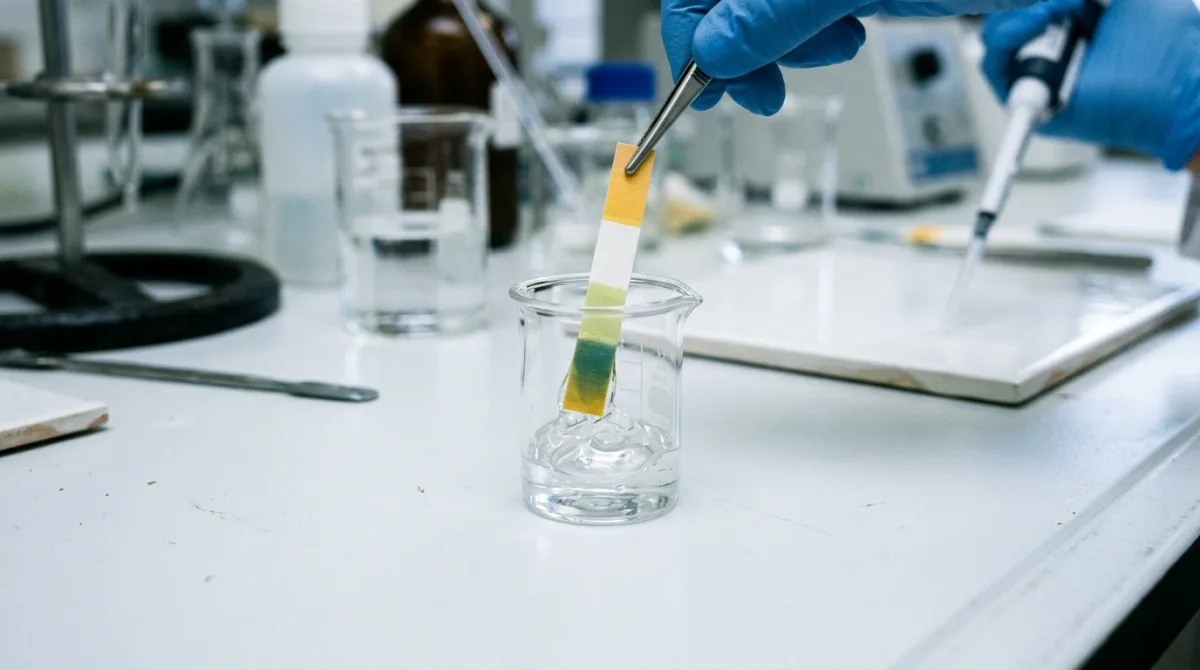
For acids: pH matters. If you’re buying AHAs, BHAs, or L-ascorbic acid, check that the product pH is appropriate (typically under 4 for effectiveness) — it’s one of the few therapeutic thresholds you can sometimes check yourself with cheap test strips, rather than taking a brand’s word for it. Brands serious about acid efficacy will disclose pH.
For cleansers: consider but don’t obsess. Avoiding very alkaline cleansers makes sense, especially if you have sensitive or dry skin. But a good surfactant system matters more than a specific pH number.
For everything else: ignore the claims. pH-balanced moisturiser, pH-optimised serum, pH-matched sunscreen — these are marketing phrases, not meaningful differentiators. Focus on ingredients and formulation, not pH marketing.
Understand buffering. Your skin maintains its own pH. Temporary contact with products at different pH isn’t the disaster some marketing implies. Normal, healthy skin is resilient.
The Bottom Line
pH matters for acids and L-ascorbic acid vitamin C. For these products, pH determines whether the active ingredient actually works. Brands should disclose, and consumers should check.
pH is moderately relevant for cleansers. Avoiding highly alkaline formulas makes sense, but pH is one factor among many that determine cleanser gentleness.
For most other products — moisturisers, serums without acid actives, sunscreens — pH claims are marketing noise. Your skin buffers product pH quickly. The claim sounds scientific but adds little value.
“pH-balanced” has become a generic quality signal divorced from scientific necessity. Know when it matters, and don’t pay premium prices for irrelevant claims.