Men's Skincare: Same Formula, Repackaged Pricier
Dark bottles. Angular design. Words like "power" and "active" and "performance." The men's skincare aisle looks different from the women's section.
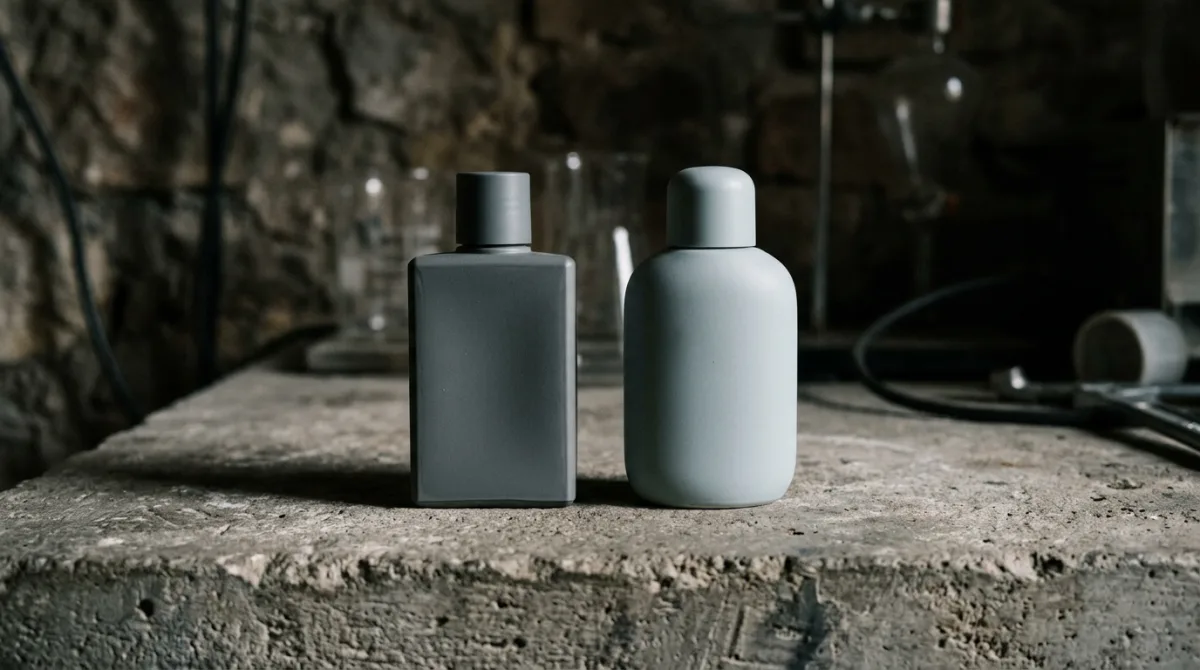
Dark bottles. Angular design. Words like “power” and “active” and “performance.” The men’s skincare aisle looks different from the women’s section. The products inside often aren’t. Welcome to the gendered packaging premium.
The Biology Reality
Male and female skin have some differences. Men’s skin is generally thicker (about 20-25% thicker dermis), produces more sebum due to higher testosterone, and has more collagen density. Men also shave their faces regularly, which affects the skin in that area.
These differences exist. What doesn’t follow: the need for entirely separate product lines with different formulations.
A vitamin C serum works the same way on male and female skin. Retinol triggers the same cellular responses regardless of the user’s gender. Hyaluronic acid hydrates human skin, full stop. The fundamental mechanisms of skincare — antioxidant protection, cell turnover, barrier support, hydration — don’t check chromosomes before activating.
What’s Actually Different
Some formulation adjustments make sense for men:
Texture preferences. Men often prefer lighter, faster-absorbing products that don’t leave visible residue. This is a reasonable formulation choice — but it’s preference, not biology. Plenty of women prefer the same textures.
Post-shave considerations. Products designed for use after shaving might avoid certain irritants or include soothing ingredients. This is genuinely shaving-specific — but any person who shaves their face has the same needs, regardless of gender.
Fragrance profiles. Men’s products typically feature “masculine” scents — woodsy, fresh, minimal sweetness. This is pure marketing preference. The fragrance doesn’t affect efficacy.
None of these justify fundamentally different formulas. They justify texture variations and fragrance choices — modifications that cost pennies, not reformulation.
The Markup Reality
Men’s skincare products are often priced higher than equivalent women’s products from the same brand. This seems counterintuitive — the “pink tax” usually goes the other way. But men’s skincare operates differently:
Smaller market, higher margins. The men’s skincare market is smaller than women’s. Brands compensate with higher per-unit margins rather than volume.
Less price sensitivity. Men entering skincare are often less experienced shoppers in this category. They don’t have years of comparison shopping. They’re more likely to accept the first price they see.
Premium positioning. Men’s products are often positioned as “performance” or “advanced” — language that justifies premium pricing, in the same way that “clinically proven” and “dermatologically tested” sound rigorous without meaning much. The implication is that men’s products are more serious, more scientific, more effective. The reality is they’re the same ingredients in different bottles.
Packaging costs. Those chunky, industrial-looking bottles are often more expensive to produce than standard cosmetic packaging — the same dynamic that drives up the cost of a heavy glass jar without improving what’s inside. You’re paying for the aesthetic that makes you feel like you’re not using “women’s products.”
The Ingredient Comparison
Compare ingredient lists between “men’s” and “unisex” or “women’s” products from the same brand — the same exercise worth doing with “professional” salon ranges and their retail equivalents, which are often the identical formula sold twice. Often you’ll find:
Nearly identical formulas with minor adjustments — perhaps a different fragrance, a slightly different texture modifier, the same actives at the same concentrations.
Sometimes literally identical formulas in different packaging. The “men’s” version and the standard version are the same product with different labels.
Occasionally, the men’s version is actually simplified — fewer actives, more basic formulation — while being priced the same or higher than the more sophisticated “women’s” version.
The assumption seems to be that men don’t read ingredient lists. That men don’t compare products. That men will accept whatever’s marketed to them as long as the packaging is sufficiently masculine.
The Marketing Machine
Men’s skincare marketing works hard to distance itself from “beauty” culture:
Language reframing. “Grooming” instead of skincare. “Maintenance” instead of routine. “Performance” instead of beauty. The implication: this isn’t vanity, it’s practical self-care. The product is the same; the story is different.
Simplified messaging. Men’s products often tout simplicity — “all-in-one,” “no-fuss,” “just works.” This positions men as too busy or too practical for complex routines. It also justifies selling fewer products at higher margins.
Masculine aesthetics. Dark colours, angular bottles, industrial design, sans-serif fonts. Nothing that could be mistaken for a product from a beauty aisle. This packaging costs more and does nothing for the formula inside.
Athlete endorsements. Sports figures rather than beauty influencers — the same name-on-the-bottle logic behind celebrity skincare lines, just with a different face attached. The message: this is about performance, not appearance. The product is still just skincare.
What Men Actually Need
Men’s skincare needs aren’t mysterious:
Cleanser. Same as anyone else. Find one that works without stripping. Gender-neutral options abound and often cost less.
Moisturiser. Men with oilier skin might prefer gel textures; men with drier skin need richer formulas. This is skin type, not gender. Match the product to your skin, not your demographic.
Sunscreen. UV radiation doesn’t discriminate. Any good SPF 30+ broad spectrum works. “Men’s sunscreen” is just sunscreen in a dark bottle.
Active treatments. Retinol, vitamin C, niacinamide — these work identically on male and female skin. Buy based on formulation quality and concentration, not gendered marketing.
Post-shave care. This is the one area where shaving-specific products make sense. Soothing ingredients, nothing too occlusive, no irritants. But “aftershave” products are often alcohol-heavy and counterproductive — a basic, fragrance-free moisturiser often works better.
The Smart Approach
Ignore gendered marketing. Shop by ingredients, texture preferences, and price — not by which aisle the product sits in.
Compare the “men’s” version to the standard version. If the ingredients are similar and the standard version costs less, buy that. The packaging doesn’t go on your face; the formula does.
Look at unisex or clinical brands that don’t gender their products. These often offer better value because they’re not maintaining parallel product lines with separate marketing budgets.
Read ingredient lists. A “men’s” vitamin C serum with 10% L-ascorbic acid is no different from a “women’s” vitamin C serum with 10% L-ascorbic acid. The molecules don’t care about branding.
The Bottom Line
Men’s skincare is largely a marketing construction. Real biological differences between male and female skin don’t justify separate product lines — they might justify texture preferences and perhaps post-shave specifics.
What you’re paying for in “men’s” skincare is: packaging designed to feel masculine, marketing designed to feel serious, and margins designed to exploit a less price-sensitive customer.
The products themselves are often identical or simplified versions of standard skincare. The premium is for the story, not the formula. Your skin doesn’t know the difference — and neither should your wallet.