Cruelty-Free Complexity: What The Bunny Logo Doesn't Tell You
Cruelty-free has no legal definition, and the bunny logos on your bathroom shelf don't all mean the same thing — one certifier audits supply chains, another just takes a brand's word for it.
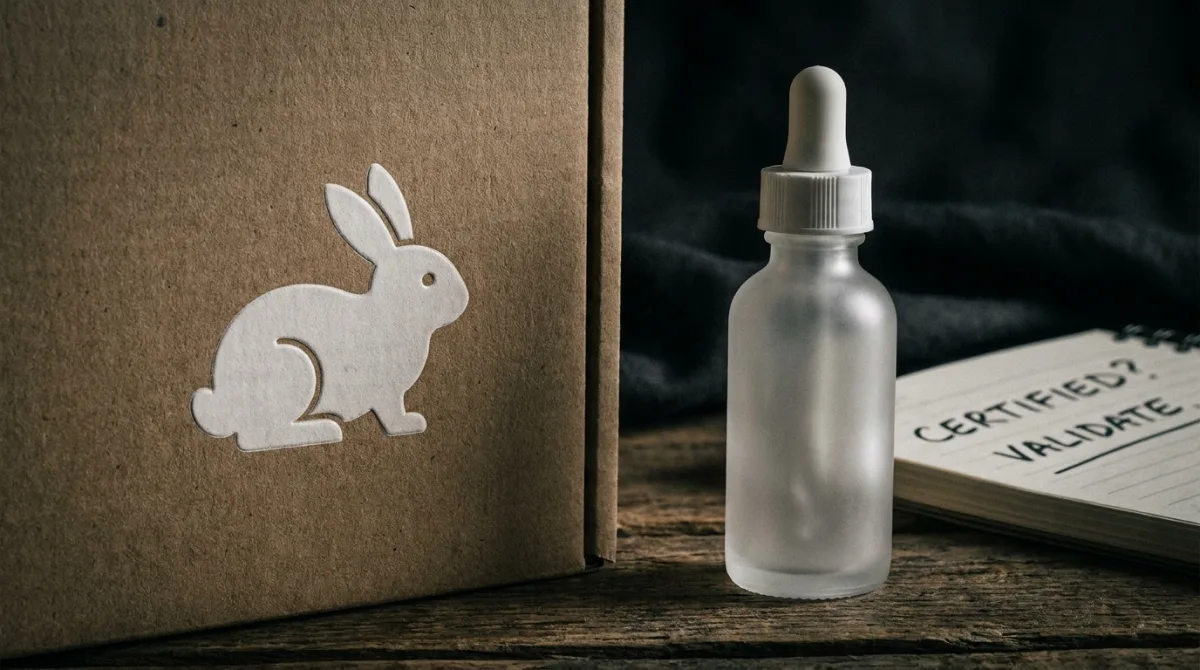
The leaping bunny. The heart-shaped rabbit. The PETA certification. Cruelty-free logos seem straightforward — this product wasn’t tested on animals. But cruelty-free claims hide layers of complexity that most consumers never consider.
What “Cruelty-Free” Actually Means
“Cruelty-free” has no legal definition. Unlike organic or terms regulated by specific standards, anyone can claim their product is cruelty-free. It’s the same regulatory vacuum that lets brands print “clean” on anything. There’s no enforcement body, no universal criteria, no legal penalty for misuse.
Generally, cruelty-free implies that the finished product wasn’t tested on animals. But this is where complications begin:
Finished product vs ingredients. A product can be “cruelty-free” while containing ingredients that were tested on animals by suppliers years ago. Most cosmetic ingredients have historical animal testing data. The cruelty-free claim typically applies to recent testing commissioned by the brand, not the complete history of every ingredient.
Third-party suppliers. Brands buy ingredients from suppliers who may conduct their own testing. A brand might not test animals, but their ingredient supplier might. Some certification schemes address this; many don’t.
Regulatory requirements. If a government requires animal testing, the brand faces a choice: test or don’t sell. Many brands choose to sell, technically becoming not-cruelty-free in that market while maintaining the claim elsewhere.
The China Question
China has long been the focal point of cruelty-free debates. Until recently, China required animal testing for imported cosmetics sold in physical retail stores.
This created a binary choice for brands: sell in China’s massive market (and accept required animal testing) or maintain cruelty-free status (and forgo significant revenue).
Many brands that advertised as cruelty-free in Western markets quietly sold in China, accepting animal testing there. The products you bought might be cruelty-free in the UK, but the same brand’s products sold in Shanghai were not.
Recent regulatory changes in China have eased some requirements — imported “ordinary” cosmetics can now be exempted from animal testing under certain conditions. But the situation remains complicated, with “special” cosmetics (including some sunscreens and products making certain claims) still subject to testing requirements. The regulatory landscape continues to evolve, and brands navigate it with varying degrees of transparency.
Parent Company Problems
Many beloved “cruelty-free” brands are owned by parent companies that aren’t:
A small, ethical brand gets acquired by a multinational that tests on animals for other products or sells in markets requiring testing. The acquired brand maintains its cruelty-free certification because its specific products aren’t tested. But purchases fund a parent company with different practices.
This raises philosophical questions: Is buying cruelty-free if your money ultimately flows to a company that conducts animal testing? Different consumers draw this line differently. Some won’t buy from brands with non-cruelty-free parents. Others focus only on the specific product.
What’s clear: the bunny logo on a product doesn’t tell you who profits from your purchase or what else that company does. The certification is narrow.
The Certification Landscape
Multiple organisations certify cruelty-free status, each with different standards:
Leaping Bunny (CCIC). Generally considered the most rigorous. Requires no animal testing in any phase of development, including by ingredient suppliers. Requires ongoing monitoring and recommitment. Doesn’t address parent companies but does address supply chain.
PETA’s Beauty Without Bunnies. Companies self-certify by signing a statement. Less rigorous verification. Easier to obtain. Doesn’t require the same supply chain auditing.
Choose Cruelty Free (Australia). Includes parent company considerations. Brands owned by non-cruelty-free parents cannot be certified. Stricter than some alternatives.
Self-declared cruelty-free. No certification, just brand claims. Relies entirely on company honesty, no external verification — the same self-declared logic behind a “hypoallergenic” label with nothing standing behind it.
The bunny logo on two products might represent very different levels of assurance depending on who issued it. Ingredient-rating databases show the same spread — the score depends entirely on who’s doing the rating and how.
Vegan vs Cruelty-Free
These terms are often conflated but mean different things:
Cruelty-free relates to testing. The product wasn’t tested on animals.
Vegan relates to ingredients. The product contains no animal-derived ingredients.
A product can be cruelty-free but not vegan (not tested on animals, but contains beeswax or lanolin). A product can be vegan but not cruelty-free (no animal ingredients, but the finished product was tested on animals). A product can be both, either, or neither.
Brands sometimes blur this distinction in marketing, implying one status when they only have the other. Check for specific claims and relevant certifications.
The Historical Testing Problem
Almost every cosmetic ingredient in use has been tested on animals at some point. Decades of safety data underlying modern cosmetics came from animal testing conducted in the past.
Cruelty-free certification typically means no new animal testing — not that the ingredient has never been tested on animals. The glycerin in your cruelty-free moisturiser was almost certainly tested on animals at some point in history. The surfactants in your cruelty-free cleanser have historical animal testing data.
This is an inherent limitation. Avoiding all ingredients with historical animal testing would mean avoiding virtually all cosmetic ingredients. Cruelty-free is about not perpetuating new testing, not erasing history.
What To Actually Look For
If cruelty-free matters to you, go beyond the bunny logo:
Check which certification. Leaping Bunny has more rigorous standards than self-declaration. Know what the specific logo means.
Research parent companies. If parent company practices matter to you, look up who owns the brand. Many independent-seeming brands are owned by large multinationals.
Check market presence. Does the brand sell in markets with animal testing requirements? Some certification databases track this; brand websites sometimes disclose it.
Separate vegan from cruelty-free. Know which claim you’re looking for and verify each independently if both matter.
Accept complexity. There’s no perfectly clean option. Every ingredient has history. Every brand makes trade-offs. Decide what level of cruelty-free meets your personal standards.
The Bottom Line
“Cruelty-free” is more complicated than a logo suggests. The term isn’t legally defined. Certifications vary in rigour. Parent companies, market access, supplier practices, and historical testing create layers most consumers never see.
This doesn’t mean cruelty-free claims are meaningless — brands with rigorous certification are making genuine commitments. It means the logo alone doesn’t tell the full story. If animal welfare matters to your purchasing decisions, you need to look beyond the bunny.
The beauty industry has made progress on animal testing — the EU banned cosmetic testing on animals, China is relaxing requirements, alternative testing methods are advancing. But navigating cruelty-free claims today requires understanding what those claims do and don’t cover.