Snail Mucin: Real Chemistry, Imaginary Standards
Snail secretion filtrate is one of the most-searched skincare ingredients in Britain. It contains genuinely useful compounds. It also has no fixed composition, no agreed extraction standard, and a clinical evidence base that wouldn't survive peer review in any other field.
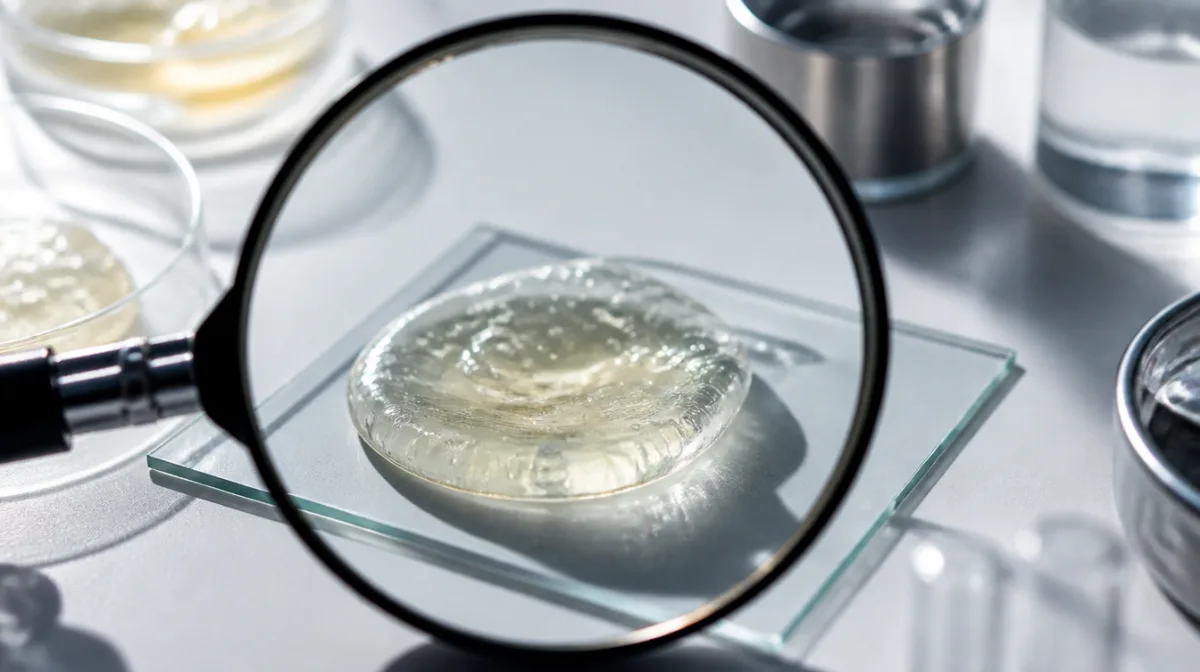
Snail mucin is the breakout skincare ingredient of the decade. Thirteen thousand people search for it every month in Britain alone. Videos of its application have accumulated billions of views. The marketing pitch is appealingly simple: snails produce a substance full of beneficial compounds — glycoproteins, allantoin, hyaluronic acid, antimicrobial peptides — and if you put it on your face, those compounds will repair, hydrate, and rejuvenate your skin.
Some of that is true. Whether the truth survives the journey from a snail’s foot to a dropper bottle is a different question.
What’s in the bottle
Snail secretion filtrate — the INCI name you’ll find on ingredient lists — is not a single substance. It’s whatever a snail produces when stimulated to secrete, filtered and processed into something that can sit in a bottle without decomposing. That composition depends on the species (most commercial mucin comes from Cornu aspersum, the common garden snail, though this is rarely specified on the label), the snail’s diet, the environment it was raised in, the method used to stimulate secretion, and the filtration process applied afterward.
Published analyses show snail mucin typically contains glycosaminoglycans (including small amounts of hyaluronic acid), allantoin, glycolic acid, glycoprotein enzymes, copper peptides, and antimicrobial compounds. That reads like a respectable ingredient list. The trouble is, the concentrations of each component vary so widely between products — and even between batches from the same farm — that “snail secretion filtrate” tells you about as much as “plant extract.” There is no pharmacopoeia entry, no USP monograph, no ISO standard, and no agreed minimum threshold for any constituent.
When molecular weight marketing packages a known molecule at a known concentration, consumers can at least evaluate what they’re getting. With snail mucin, the active compounds are real but their presence in any given product is essentially a matter of trust.
The evidence in context
The clinical evidence for snail mucin in skincare is thin. It exists, and that puts it ahead of several trending ingredients this site has covered, but much of it would not meet the standard expected of a pharmaceutical ingredient making similar claims.
A handful of small human trials have measured improvements in skin hydration and elasticity after several weeks of twice-daily application. One study reported a 15% reduction in fine lines over sixty days, which sounds promising until you read the sample size — under forty participants, no blinded control group. Several more impressive studies are in vitro, conducted on isolated cell cultures or tissue models rather than on living skin in real conditions. Others use animal models that don’t translate cleanly to human cosmetic outcomes.
A 2025 review paper catalogued the bioactive properties of snail secretion and concluded the evidence was “genuinely encouraging.” The same paper noted the field urgently needed larger, better-controlled trials to establish whether the in vitro promise translates to clinical reality. That gap — between encouraging preliminary data and confident packaging claims — is one this site has examined in peptides, hyaluronic acid, and a dozen other trending ingredients. Small studies with suggestive results become marketing certainties long before the science catches up.
The individual compounds found in snail mucin do have evidence behind them. Allantoin is a well-established skin-conditioning agent with decades of clinical use. Glycolic acid is a proven exfoliant. Hyaluronic acid functions as a surface humectant. But each of these is available as a purified, standardised ingredient at a known concentration, manufactured to pharmaceutical specifications. Buying them via a snail is paying a premium for a variable mixture wrapped in a compelling origin story.
The collection question
Snail mucin products are frequently positioned as natural and ethical — a gentle, animal-derived ingredient that doesn’t require slaughter. The reality is more complicated. Snails must be stimulated to produce the volume of mucin that commercial harvesting requires. Methods vary across farms: some use dark rooms with mesh surfaces and misters, allowing snails to secrete in relatively low-stress conditions. Others use agitation, manual handling, or dilute salt solutions — techniques that stress the animal into producing defensive mucin, which may have a different biochemical profile from the substrate secreted during normal locomotion.
There is no industry-wide standard for extraction methods, no independent certification scheme equivalent to what exists for cruelty-free cosmetics claims, and no way for a consumer reading a label to know which method produced the filtrate inside. “Ethically harvested” appears on some packaging without a defined meaning.
What you’re paying for
Strip the marketing away and snail mucin is a variable cocktail of individually useful compounds, delivered at unstandardised concentrations through an unregulated extraction process. The compounds work. Whether they work better in a snail-derived matrix than in a formula using the same compounds at known concentrations — allantoin, glycerin, a low-molecular-weight humectant — is a question that has not been answered, and that the industry selling these products has little commercial reason to ask.
The ingredient’s popularity is not built on clinical superiority. It is built on a narrative: the idea of a natural, ancient substance secreted by an unassuming creature, now captured and bottled for your face. That narrative is compelling. The science is a work in progress — preliminary, small-scale, and inconsistent — being sold as though the verdict is already in. The premium you pay reflects the story rather than the evidence, and for a composition that changes with every batch, there’s no practical way to confirm what landed in your bottle or whether it matches the version tested in the study being cited on the product page.