Paraben-Free: Losing a Tested Preservative to Win a Marketing Label
Parabens are among the most studied preservatives in cosmetics. The 'paraben-free' label replaced them not because science demanded it, but because fear sold better.
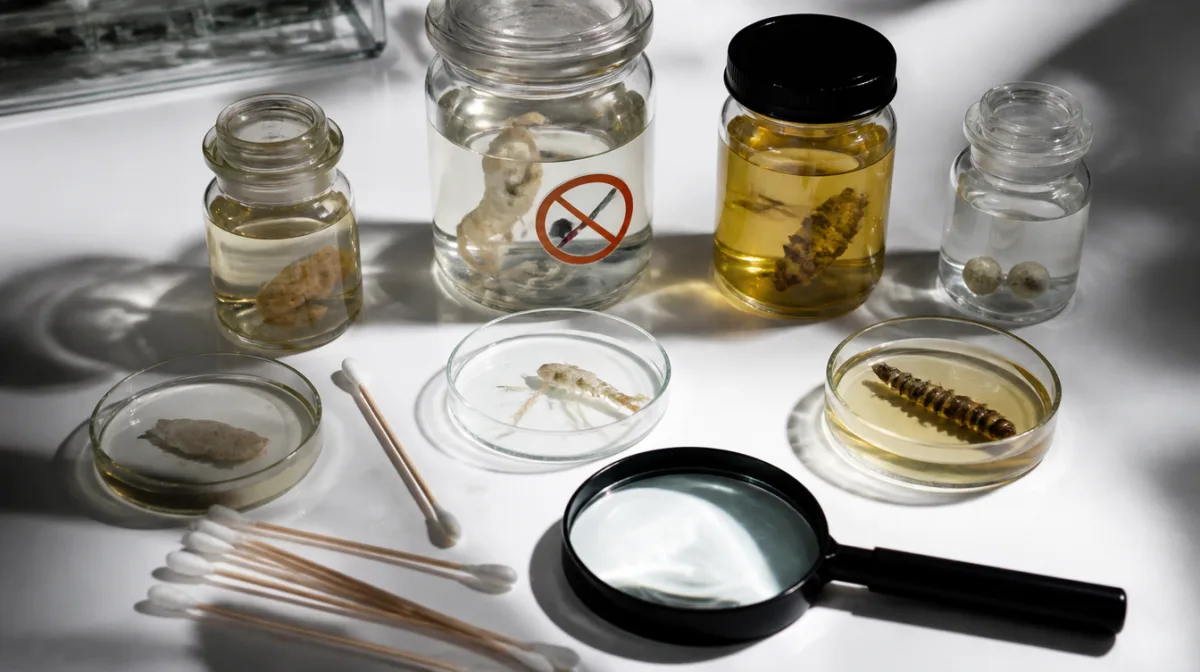
In 2004, a single study changed the preservative landscape of the entire cosmetics industry. Not because it proved anything — it didn’t — but because it scared enough people to make “paraben-free” a selling point worth printing on every bottle.
Twenty-two years later, parabens remain among the best-studied preservatives available to formulators. The UK government has just finished banning 16 genuinely dangerous substances from cosmetics. Parabens weren’t on the list. They never have been.
The study that rewrote product labels
Philippa Darbre’s 2004 paper reported finding trace concentrations of parabens in breast cancer tissue samples. The paper itself was cautious: it drew no causal conclusion and acknowledged significant limitations. There was no control group — no comparison with non-cancerous tissue to establish whether parabens accumulate differently in tumours than in healthy breast tissue. Later studies confirmed they don’t.
But academic caution rarely survives contact with a newspaper headline. Within months, the finding was reported as “parabens cause cancer” — a claim the study never made and its authors never supported. Consumer fear followed, and brands spotted an opportunity. If people were frightened of an ingredient, removing it became a feature. “Paraben-free” labels appeared not because regulators demanded them, but because marketing departments recognised their value.
The original fear didn’t come from toxicology. It came from a study that wouldn’t pass the scrutiny this site applies to any brand-funded trial — except this one wasn’t even brand-funded. It was simply incomplete.
What the regulators actually found
The European Commission’s Scientific Committee on Consumer Safety reviewed parabens in 2005, 2008, 2010, 2013, and 2014. Each review examined the endocrine disruption data, the carcinogenicity data, and the exposure calculations. Each time, short-chain parabens — methylparaben and ethylparaben — were confirmed safe at concentrations up to 0.4% individually and 0.8% as a mixture.
Two longer-chain parabens (propylparaben and butylparaben) were restricted to lower maximum concentrations, and banned entirely from products designed for the nappy area of children under three. That restriction was proportionate and evidence-based.
The UK’s own regulatory framework followed suit. When SI 2026/23 introduced its latest round of cosmetic ingredient bans this August — prohibiting 16 CMR-classified substances including certain organotin compounds, industrial intermediates, and the UV filter 4-MBC — parabens were absent from the list. Regulators ban substances when the evidence warrants it. For parabens, it hasn’t.
“Paraben-free” implies that parabens are something worth avoiding. The regulatory record says otherwise. There is a real difference between a restricted ingredient used within tested limits and a dangerous one, and the labelling deliberately blurs it.
The replacement problem
A preservative-free cosmetic is a petri dish. Water-based formulations need microbial protection, and when brands drop parabens, something else goes in. The alternatives are not automatically safer.
Methylisothiazolinone surged in popularity as a paraben replacement through the 2010s. By 2013, dermatologists across Europe were reporting an epidemic of contact allergic reactions. The EU banned it from leave-on products in 2016. That is what an ingredient safety crisis actually looks like — an observable wave of clinical harm, leading to regulatory action. Parabens never produced one.
Phenoxyethanol, now the most common paraben substitute, has a narrower effective pH range and typically requires higher concentrations to achieve equivalent preservation. Formaldehyde-releasing preservatives — DMDM hydantoin, imidazolidinyl urea — remain permitted in the UK and EU at controlled levels, but carry their own consumer stigma, partly because labelling rules can obscure what’s actually in a product.
The practical consequence is circular. Brands remove a well-characterised preservative to satisfy a fear that was never evidence-based, then replace it with preservatives that are either less studied, more allergenic, or more difficult to formulate with. The product doesn’t become safer. It becomes differently preserved, often less robustly, and it costs more — because reformulation is expensive and “free-from” packaging commands a premium.
What the label actually tells you
“Paraben-free” is not a safety classification. It is a substitution notice — a specific family of well-studied preservatives was removed and replaced with something else. The label exists not because a regulator required it, but because a marketing department calculated it would shift units. That calculation has been correct for two decades.
The question worth asking is straightforward: what did you gain by paying more for a product that dropped its most reliable preservative system in favour of one that hasn’t been studied for anywhere near as long? Five independent regulatory reviews gave the same answer. The industry chose not to hear it.