The Cosmetic Safety Report: A Desk Review, Not a Lab Test
Every UK cosmetic product has a safety report. Most consumers assume that means rigorous testing. It usually means one qualified person reviewed existing literature — and sometimes, even that isn't enough.
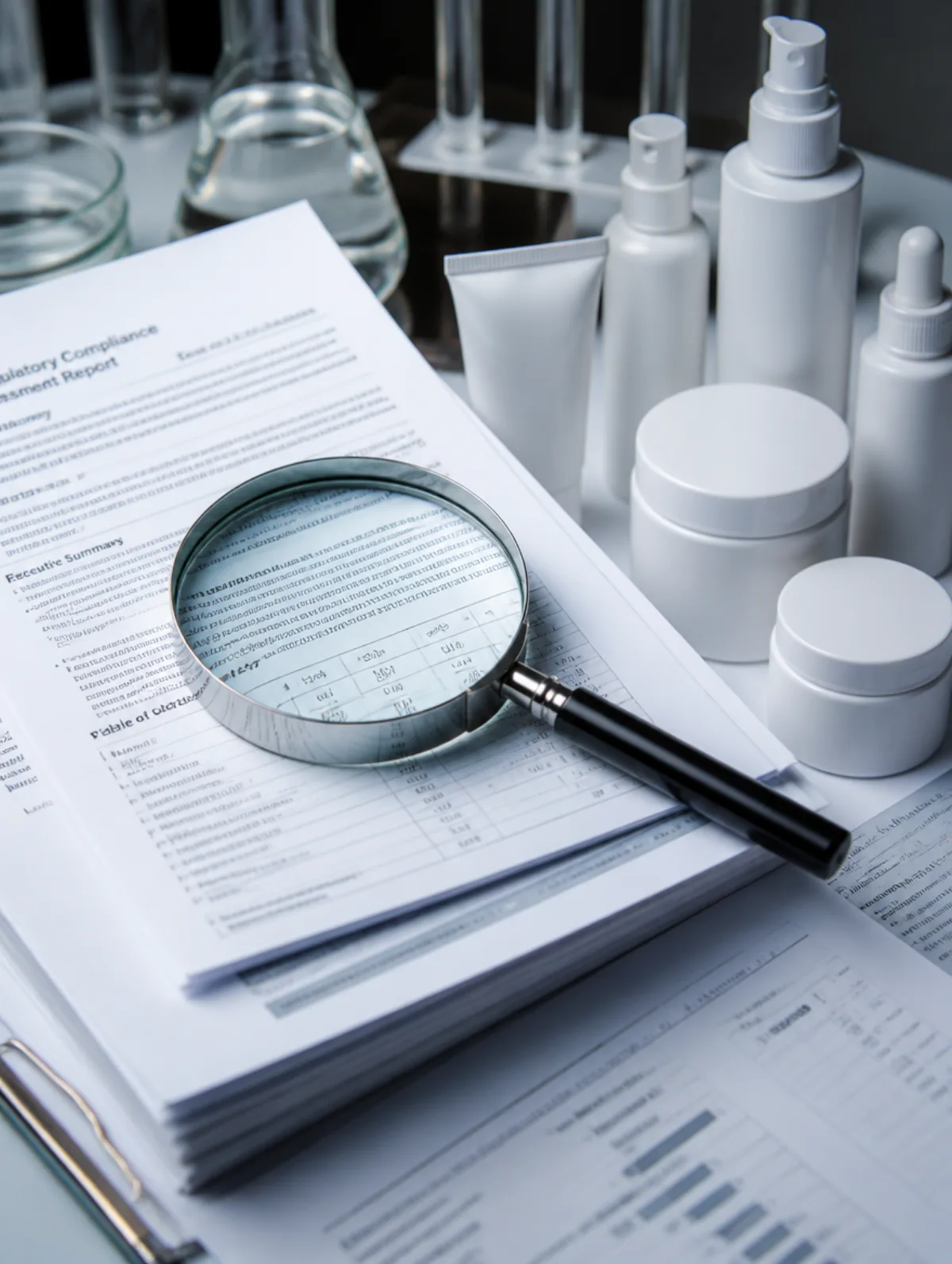
When a product says “safety assessed,” most people picture white coats, patch-test panels, and months of clinical scrutiny. The reality is less cinematic. A Cosmetic Product Safety Report — CPSR, in the jargon — is a document. Usually between four and twenty pages. Compiled by a single qualified assessor. Their job: review the toxicological literature on each ingredient, calculate a Margin of Safety, and sign off that the finished product is unlikely to cause harm under normal use.
No new lab work is required. No clinical trial on human volunteers. No long-term monitoring obligation. The assessor draws on published data — often decades old, sometimes thin — and makes a professional judgment call. There are approximately 400 qualified safety assessors in the United Kingdom. Between them, they cover every moisturiser, shampoo, sunscreen, and nail varnish that reaches the market.
The Data Problem
The assessment is only as good as the data behind it. And the data, frequently, has gaps.
Take 4-MBC, a UV filter used in sunscreens across the UK for years. On 15 July 2026, it was banned from all cosmetic products sold in Great Britain. The Scientific Advisory Group on Chemical Safety couldn’t confirm it was safe — not because new evidence proved it dangerous overnight, but because the “limited data package available for review” left too many questions about genotoxicity and endocrine disruption unanswered.
A month later, on 15 August, sixteen more substances classified as carcinogenic, mutagenic, or toxic to reproduction were prohibited — including TPO, a photoinitiator found in UV-cured nail products. These weren’t fringe chemicals. They were in products that had passed safety assessments and sat on shelves legally until last week.
The system didn’t fail in the way people assume. It worked as designed: assessments reflect what’s known at the time. The trouble is that “what’s known” is sometimes alarmingly little, and the mechanism for revising old assessments barely exists.
Who Pays, Who Checks
Brands commission their own safety assessments. The assessor is paid by the company whose product they’re evaluating. The same pool of roughly 400 people serves the entire UK cosmetics market, and each assessor’s signature carries personal professional liability — Trading Standards can inspect any CPSR at any point. Most take that responsibility seriously.
But the structural incentive is familiar territory for anyone who’s looked at how brand-funded clinical studies dominate efficacy claims: the entity paying for the evaluation is the same entity that benefits from a favourable outcome.
There’s no public register of these assessments. You can’t look up what data an assessor reviewed for your moisturiser, what margin of safety they calculated, or what concerns they noted. The document exists. It’s legally required. It sits in a file, accessible to regulators on request, invisible to everyone else.
The Formaldehyde Threshold Shift
The August 2026 regulations also adjusted the formaldehyde labelling threshold — cutting it fifty-fold, from 0.05% to 0.001%. Products releasing formaldehyde above the new limit must carry a warning label.
Formaldehyde releasers are common preservatives in skincare and haircare. Products legally sold without any warning yesterday may need one tomorrow — not because the formula changed, but because the threshold did. The ingredient was always releasing formaldehyde at that concentration. Regulators just decided the old limit wasn’t protective enough.
For anyone who pays attention to where the 1% line falls on an ingredients list, this is a concrete reminder that “legally compliant” and “fully understood” are separate things entirely.
What “Safety Assessed” Actually Tells You
The CPSR system is better than nothing. It’s considerably better than the US approach, where the FDA still has no pre-market safety review authority for cosmetics. But those are low bars.
When a brand writes “safety assessed” on packaging, it means one qualified person reviewed published literature and signed a document. The product wasn’t independently tested. A complete toxicological profile for every ingredient wasn’t guaranteed either. And unless a regulator forces the issue, nobody is obliged to revisit that assessment as new evidence accumulates.
Sixteen substances were just pulled from the UK market because the science advanced and regulation followed — years after the concerns first surfaced. Every product containing them had a valid safety report on file. Every report reflected the best available knowledge when it was written, which turned out not to be enough.
These reports aren’t fraudulent. They’re snapshots — qualified opinions drawn from incomplete data, fixed at one point in time. The question worth asking about your products isn’t whether they’ve been safety assessed. It’s what that assessment was actually based on, and when anyone last bothered to check whether it still held up.